
Newsroom24x7 Network

Paris: On World Cities Day, 31 October, 55 cities have joined the UNESCO Creative Cities Network (UCCN), following their designation by UNESCO Director-General Audrey Azoulay.
New cities were acknowledged for their strong commitment to harnessing culture and creativity as part of their development strategies, and displaying innovative practices in human-centred urban planning. With the latest additions, the Network now counts 350 cities in more than one hundred countries, representing seven creative fields: Crafts and Folk Art, Design, Film, Gastronomy, Literature, Media Arts and Music.
The new members of the UNESCO Creative Cities Network are:
Asaba – Film
Ashgabat – Design
Banja Luka – Music
Battambang – Gastronomy
Bissau – Music
Bolzano – Music
Bremen – Literature
Buffalo City – Literature
Bukhara – Crafts and Folk Art
Bydgoszcz – Music
Caen – Media Arts
Caracas – Music
Casablanca – Media Arts
Castelo Branco – Crafts and Folk Art
Cetinje – Design
Chaozhou – Gastronomy
Chiang Rai – Design
Chongqing – Design
Concepción – Music
Da Lat – Music
Fribourg – Gastronomy
Gangneung – Gastronomy
Granada – Design
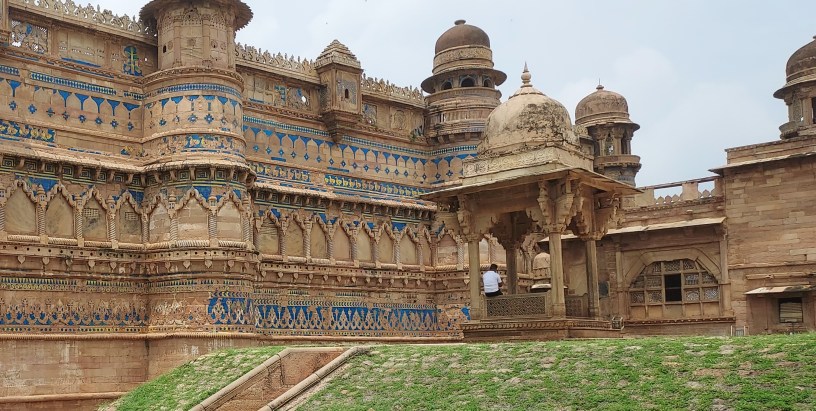
Gwalior – Music
Herakleion – Gastronomy
Hobart – Literature
Hoi An – Crafts and Folk Art
Iasi – Literature
Iloilo City – Gastronomy
Ipoh – Music
Kathmandu – Film
Kozhikode – Literature
Kutaisi – Literature
Mexicali – Music
Montecristi – Crafts and Folk Art
Montreux – Music
Nkongsamba – Gastronomy
Novi Sad – Media Arts
Okayama – Literature
Ouarzazate – Film
Oulu – Media Arts
Penedo – Film
Rio de Janeiro – Literature
Şanlıurfa – Music
Suphanburi – Music
Surakarta – Crafts and Folk Art
Taif – Literature
Toulouse – Music
Tukums – Literature
Ulaanbaatar – Crafts and Folk Art
Umngeni Howick – Crafts and Folk Art
Valencia – Design
Varaždin – Music
Veliky Novgorod – Music
Vicente Lopez – Film
The city of Lyon, Creative City of Media Arts since 2008, has been granted a status of a Creative City of Literature, following its request to change creative field.
Newly designated cities will cooperate with Network members to strengthen their resilience the face of evolving threats such as climate change, rising inequality, as well as rapid urbanization, with 68% of the world’s population projected to live in urban areas by 2050.
“The cities in our Creative Cities Network are leading the way when it comes to enhancing access to culture and galvanizing the power of creativity for urban resilience and development,” says Audrey Azoulay, UNESCO Director-General.
National Tansen Festival
The National Tansen Festival or Tansen Samaroh is celebrated every year in the month of December in Gwalior to honour the memory of the Great Indian Musical Maestro Tansen.
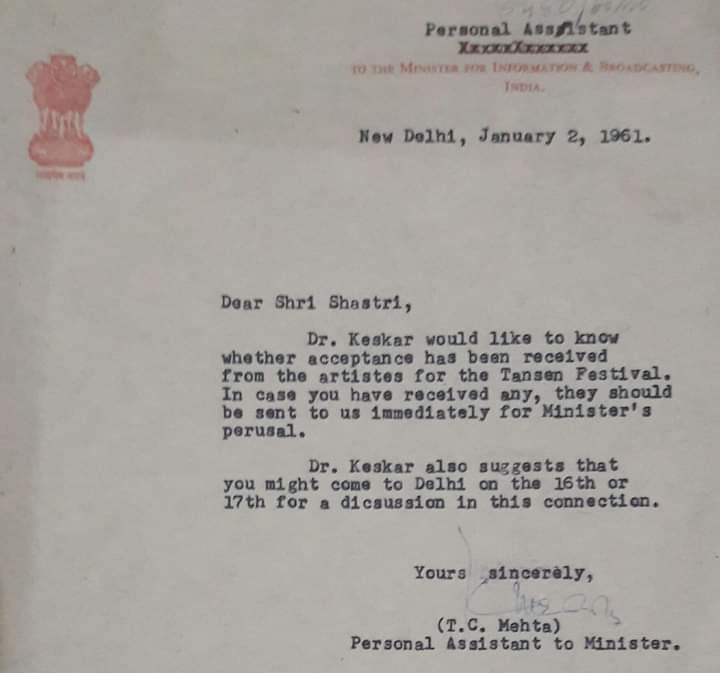
Artists and music lovers from all over the world gather and perform at the Tansen Festival in Gwalior. It was originally a local festival organized near the samadhi (tomb) of Tansen but when BV Keskar was the Union Minister for Information and Broadcasting between 1952 and 1962, Tansen Samaroh was turned into a popular national music festival.
Anant Maral Shastri, who was Keskar’s contemporary in Kashi Vidyapeeth in the pre-Independence days, came to Madhya Bharat as Director of Information and Publicity in 1949. He held that post till the formation of Madhya Pradesh on 1 November 1956. It was with his initiative and efforts at the ground level that the famous Tansen Samaroh at Gwalior was turned into a national Music festival with the full support and involvement of BV Keskar, in his capacity as Union Minister for Information and Broadcasting (1952–62). After Tansen Samaroh was turned into a national Music festival, it became a popular platform for maestros to perform.
Sarod Ghar

“I am so happy to know that Madhya Pradesh, Gwalior, land of the Saint musician Tansen, has got UNESCO recognition as ‘City of Music’ at the 42nd Session of the General Conference for its commitment to culture, creativity, and innovative urban planning. The City of Gwalior is famous as an ancient seat of culture. I feel spiritually uplifted when I think that I was born in Madhya Pradesh, in the same town where the saint musician Tansen was born and where his samadhi is. My father, the legendary Sarod maestro, Ustad Haafiz Ali Khan of Gwalior lived for Music. For my father, though, there was no question of a life outside music. Life itself was Music and Music was Life. The creation of Sarod Ghar in Gwalior, a unique institution devoted to musical heritage is my humble tribute to my father and Guru.”
– Amjad Ali Khan
Ustad Haafiz Ali Khan Saheb of Gwalior, father and Guru of Sarod maestro Ustad Amjad Ali Khan, was one of the foremost classical instrumentalist of his time.
Born in 1877, Ustad Haafiz Ali Khan, belonged to the fifth generation in the Bangash family that is credited with the Sarod’s origin and development.
The Ustad Haafiz Ali Khan Trust was formed in the year following the death of Ustad Haafiz Ali Khan Saheb in 1972. The objectives of the Trust are to propogate the memories of past masters and promote Indian classical music all over the world.
A museum to salute the memory of Haafiz Ali Khan Saheb, has been housed in Sarodghar that was once the family’s ancestral home in Gwalior. The house has a colourful history with four generations of Sarod players being born there.
Gwalior Gharana
Ustad Bade Inayat Hussain Khan (1837–1923) was a classical Indian vocalist who belonged to the famous Gwalior Gharana. He was the maternal grandson of Nathan Pir Bakhsh, the founder of Gwalior Gharana.
Bade Inayat Hussain Khan was a singer who expanded the Gwalior style from the methodical form it followed to the emotional style that he preferred.
The most significant changes in the parampara came from around the late 18th century onward following the migration of Nathan Peer Baksh from Lucknow to Gwalior. Gwalior gharana of Indian classical music is easily the doyen amongst Khayal gharanas.
 This is News