
Shivani Bhardwaj
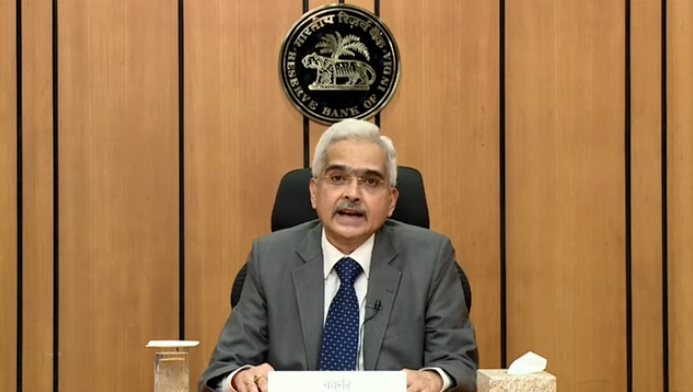
Mumbai: Reserve Bank of India (RBI) Governor Shaktikanta Das delivered a significant address today, emphasizing the timeless relevance of stability in the pursuit of equitable wealth distribution and augmentation.
Citing the ancient Indian text, Kautilya’s Arthashastra, which is over two thousand years old, Governor Das underlined the enduring validity of the principle that “stability enables a state not only to share its wealth equitably but also augment it.”
In his speech, Governor Das stressed the critical role of macroeconomic stability and inclusive growth as the fundamental principles underpinning a nation’s progress. He highlighted the RBI’s steadfast commitment to maintaining macroeconomic and financial stability, despite recent years witnessing multiple and unprecedented shocks. Notably, he declared that the twin balance sheet stress faced a decade ago had transformed into a twin balance sheet advantage, marked by healthier balance sheets for both banks and corporates. As a result, India is poised to become a new global growth engine.
However, Governor Das cautioned against complacency, drawing lessons from the past and international experiences like the global financial crisis and taper tantrum. He urged all stakeholders, including lenders, corporations, small and large businesses, and policymakers, to fortify their buffers and fundamentals in our rapidly changing world.
Governor Das highlighted the RBI’s identification of high inflation as a major risk to macroeconomic stability and sustainable growth. Accordingly, the central bank’s monetary policy remains unwaveringly focused on aligning inflation with the 4 percent target on a durable basis.
Monetary Policy Committee (MPC) Decisions and Rationale
The Monetary Policy Committee, comprising members who met on 4, 5 and 6 October 2023, announced its unanimous decision to maintain the policy repo rate at 6.50 percent. This decision also translates to the standing deposit facility (SDF) rate remaining at 6.25 percent and the marginal standing facility (MSF) rate and the Bank Rate at 6.75 percent. The MPC, with five out of six members in favor, also committed to withdrawing accommodation to ensure progressive alignment of inflation with the target while supporting growth.
The rationale for this decision stems from headline inflation surging in July due to rising vegetable prices but subsequently correcting in August and expected to further ease in September. Importantly, core inflation, which excludes food and fuel, has been declining. Nevertheless, the overall inflation outlook remains clouded by uncertainties such as low reservoir levels, volatile global food and energy prices, and challenges in crop production. The MPC acknowledged the recurring occurrence of significant food price shocks, which could contribute to persistent headline inflation.
Governor Das underscored that the transmission of the 250 basis points increase in the policy repo rate to bank lending and deposit rates is still incomplete, leading the MPC to maintain its focus on withdrawing accommodation. The MPC remains highly alert and prepared to take timely policy measures as needed to align inflation with the target and anchor inflation expectations.
Assessment of Growth and Inflation
Global Growth: Governor Das provided insights into the global economic landscape, noting a slowdown due to tight financial conditions, geopolitical tensions, and increasing geoeconomic fragmentation. Global trade is contracting, headline inflation is easing but remains above target in major economies, and central banks are signaling a prolonged period of tight monetary policy.
Domestic Growth: In contrast to global trends, India’s domestic economic activity displays resilience driven by robust domestic demand. Agriculture, manufacturing, and services sectors are experiencing momentum, with strong expansion indicators, particularly in pharmaceuticals, metals, cement, and more. Investment activity, supported by government capex and private sector capex, continues to grow. While urban consumption remains steady, rural demand shows signs of revival.
Inflation: Governor Das addressed inflation dynamics, highlighting that recent high inflation levels in July and August were driven by food price pressures, particularly in vegetables. Core inflation, however, has moderated. He noted that the future trajectory of inflation depends on factors such as crop production, global food and energy prices, and geopolitical tensions. Despite near-term expectations of softening inflation, risks from these factors persist.
Monetary Policy Implications
Governor Das emphasized the need for careful monitoring of incoming data and the outlook to distinguish durable price shocks from transitory ones. He highlighted that monetary policy must be ready to act promptly to prevent spillovers from food and fuel price shocks to underlying inflation trends and protect inflation expectations. This underscores the central bank’s commitment to maintaining price stability, anchoring inflation expectations, and achieving the 4 percent inflation target.
Liquidity and Financial Market Conditions
Governor Das discussed liquidity conditions and the importance of synchronizing them with the monetary policy stance. He announced the discontinuation of the incremental cash reserve ratio (I-CRR), which had impounded around ₹1.1 lakh crore from the banking system. Despite short-term liquidity adjustments, financial conditions remained stable.
Looking ahead, Governor Das noted the need for banks to assess their liquidity requirements, engage in inter-bank call money transactions, and explore lending opportunities rather than passively parking funds in less attractive rates like the standing deposit facility (SDF). He also mentioned the possibility of Open Market Operation (OMO) sales to manage liquidity in line with the monetary policy stance.
Financial Stability and External Sector
Governor Das highlighted the resilience of the Indian banking system, backed by improved asset quality, stable credit growth, and robust earnings growth. However, he cautioned against the high growth in certain components of personal loans, urging banks and non-banking financial companies (NBFCs) to strengthen risk management and underwriting standards.
Regarding the external sector, India’s merchandise exports and imports contracted in 2023-24 but at a decelerated pace. Services exports remained strong, while the current account deficit declined to 1.1 percent of GDP in Q1:2023-24. Foreign portfolio investment (FPI) witnessed inflows, while foreign direct investment (FDI) moderated. India’s foreign exchange reserves stood at US$ 586.9 billion.
Additional Measures
Governor Das announced several additional measures, including the release of draft guidelines for project finance, changes in credit concentration norms, increased limits for Gold Loans under the Bullet Repayment scheme, and the extension of the Payments Infrastructure Development Fund (PIDF) scheme. Other measures involved the introduction of Card-on-File Tokenisation (CoFT), a master direction on the Internal Ombudsman Mechanism, and a framework for recognizing Self-Regulatory Organisations (SROs) for various categories of Regulated Entities (REs).
Conclusion
In conclusion, Governor Shaktikanta Das affirmed India’s commitment to aligning inflation with the 4 percent target while supporting growth. He emphasized the importance of price stability, anchoring inflation expectations, and maintaining financial stability. Amid global uncertainties and domestic challenges, India’s macroeconomic fundamentals and buffers remain strong, positioning the nation for continued progress and growth.
 This is News