
Dr Rajshri Shastri
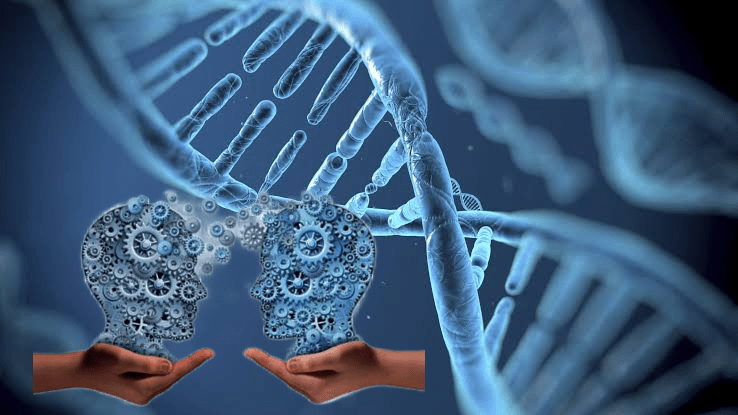
Genetic factors, deeply embedded in our DNA, can also exert their influence on societal norms and traditions.
The intricate interplay between society, traditions, and genetic code constitutes a complex and multifaceted relationship that underscores the fundamental question of “nature versus nurture”. This intricate connection delves deep into the essence of what makes us who we are as individuals and as a collective society. Society and its traditions, in their multifarious ways, exert a significant influence on human behavior, values, and even genetic expression, thus shaping the course of our lives.
Traditions, like threads woven through the changing times, carry within them the essence of a culture’s norms, rituals, and values. They serve as a bridge that connects the past with the present, carrying forward the collective wisdom and experiences of generations long gone. These traditions are not merely customs but the embodiment of the soul of a community, playing a pivotal role in fostering social cohesion.
When individuals participate in these traditions, they become more than passive observers; they become active participants in the continuation of a cultural legacy. The rituals and customs become a part of their identity, influencing their thoughts, actions, and worldviews. In essence, traditions serve as a medium through which society imparts its values onto its members, perpetuating cultural continuity.
Moreover, society itself acts as an orchestrator, directing complex human behavior through norms and expectations. These societal dynamics shape our interactions, decisions, and even the choice of our life partners. Mate selection, for instance, is heavily influenced by societal norms and preferences. Societies that place a premium on physical strength might tend to favor individuals with genetic predispositions for muscular development, leading to the transmission of such traits within specific populations.
However, this relationship is not unidirectional. Genetic factors, deeply embedded in our DNA, can also exert their influence on societal norms and traditions. Evolutionary psychology suggests that many human behaviors have evolved as adaptive responses to our environment, imprinted within our genetic code. For instance, the instinct to protect offspring is a deeply ingrained aspect of human nature. This instinct has led to the development of cultural practices and norms that prioritize family and kinship, reinforcing the importance of these bonds in society.
This intricate interplay between genetics and culture is not a simple dichotomy but a dynamic and reciprocal relationship. Society moulds and is moulded by our genetic predispositions. It’s an interplay between “nature and nurture”, where both influence each other’s moves. Understanding this relationship is essential for comprehending the complexities of human behavior, culture, and evolution.
To delve deeper into this multifaceted relationship, let’s consider a real-world example: the cultural practice of arranged marriages in some societies, especially in India. In these cultures, mate selection is often guided by familial and societal expectations. Individuals are expected to marry within their social or cultural group, which can lead to the preservation of certain genetic traits or predispositions within that group. For instance, a society that highly values intellectual pursuits might prioritize the selection of mates with strong genetic predispositions for cognitive abilities, thus reinforcing these traits within the population.
Conversely, one could argue that such cultural practices themselves arise from the genetic predisposition for social bonding and kinship. Humans have evolved to thrive in cooperative groups, and this inclination towards social cohesion has shaped cultural practices like arranged marriages as a means to strengthen social ties and alliances.
This intricate relationship between genetics, society, and traditions is not limited to the domain of mate selection. It extends to various aspects of human existence, from the development of language to the establishment of social hierarchies. Language, for instance, is a fundamental part of culture and society. Yet, the human ability to acquire and use language is deeply rooted in our genetic code, with specific genes associated with language development. This genetic predisposition has allowed for the emergence of diverse languages and dialects across the world, each with its own cultural nuances and traditions.
Similarly, the formation of social hierarchies and power structures within society can be traced back to genetic predispositions related to dominance and cooperation. These predispositions have played a role in the development of societal norms and traditions surrounding leadership, governance, and social roles.
In essence, the link between society, traditions, and genetic code is dynamic and intricate, where each element influences and is influenced by the others. Society shapes our behaviors, values, and traditions, which, in turn, can influence the expression of our genetic predispositions. At the same time, our genetic code underlies many of our innate behaviors and tendencies, which, over time, have given rise to cultural practices and traditions.
In conclusion, the relationship between society, traditions, and genetic code is not a simple one-directional chain of causality but a complex interplay that defines who we are as individuals and as a species. It is a relationship that continues to shape our cultures, behaviors, and societies, and it underscores the profound interconnectedness of nature and nurture in the human experience. Understanding this intricate relationship is crucial for unlocking the mysteries of human behavior, culture, and evolution, and it invites us to explore the profound depths of what it means to be human.

Dr. Rajshri Shastri, is Professor of Sociology with Institute for Excellence in Higher Education (IEHE) in Bhopal. She is an authority on ethnic communities. Her Doctoral research on “Transition among the Marias of Bastar” and M.Phil thesis on the “Murias of Bastar” are important reference volumes. She is a University topper at the MA-Sociology and MPhil level. Besides academics, she has done extensive work in areas like the Unorganised Sector, Women’s Empowerment, Environment, Wildlife Conservation and Animal Welfare.
 This is News