
Tapan Misra
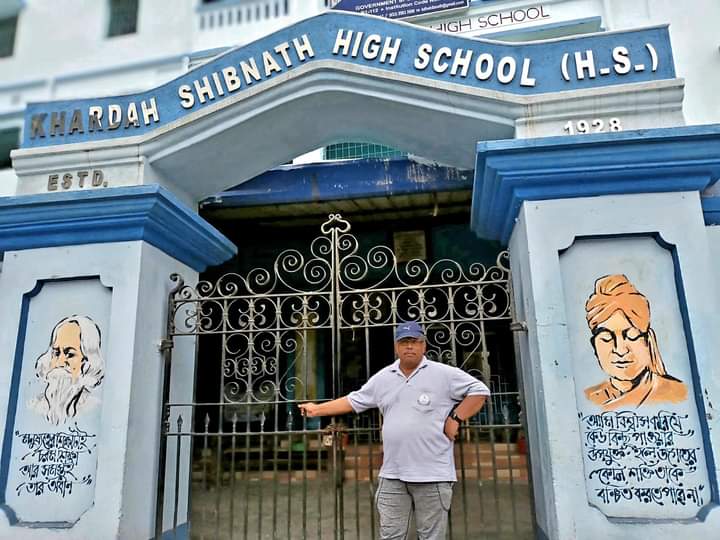
My schooling in the Shibnath High School in 1972, that too only for a year in class five, happened in the backdrop of severe political turmoil raging in West Bengal. It was established in 1928. It is probably the oldest school in Khardah, where I grew up for considerable period of my childhood and growing up years.
West Bengal started slipping into the grip of political unrest from 1967. Since then, Industries were being shut down one by one in rapid progression. Workers were ready to lose their livelihoods for the sake of mythical workers’ rights. Clamouring for equality of outcome replaced any effort in equality of opportunity (due credit to Winston Churchill). The regular job goers increasingly started metamorhosing into street side jobless loafers, trying to eke out their living at the border of social dysfunction.
India won Bangladesh war in 1971. But prior to that win, West Bengalis were under heavy pressure of refugee influx from their eastern neighbour. Every railway station, every piece of open land in the neighbourhood of Kolkata, was littered with emaciated refugees, hapless victims of cruel politics across eastern border. In the midst of this man made catastrophe, death and birth, the eternal cycle of life, were on full public display without any cheer or remorse. After the creation of Bangladesh, the refugees started moving to the newly created country, with a lot of hope for future, carrying deep scars of recent past.
The freedom fighters left behind heavy weaponery, at a price, to competing politicals outfits: outlawed Naxalites, main stream communists of slightly differing shades and the traditional parties, born out of internecine power struggle within the original political party, which led Bharat’s freedom struggle.
Suddenly, staccato of gunfires increasingly started replacing logical debates, reasoned colloquium and sanity. Vandalism, in the name of spreading ideology, became the norm. Some political party’s martyrs became some other’s class enemies. The education system became their common prey. Schools, colleges were shut down. Mass copying became neo normal for obtaining school and college leaving certification.
Shibnath High School was virtually shut down, with hardly any attendance. Class walls were defaced with quotes from Mao Zedong, Lin Biao, Trotsky, Lenin, Stalin and of course, Charu Majumdar. Most of the ceiling fan blades were bent in the shape of Lotus. Most teachers bunked their duties. A handful of students like me were still attending one or two periods daily, simply because a cane weilding Maths teacher, Baidyanath Sir, in his late fifties, refused to bow down to the diktats of newly christened political lumpen elements, many of whom were his ex-students. He was particular of maintaining his punctual routine, oblivious of tumultuous self destruction going on outside. He used to make us solve the toughest of math problems. He was very fussy of logical approach to a T. Right answers, with not so right steps and approaches, used to invite big zero and a few instances of caning. Sometimes, he used to punish with a wild seed that was heated up on rubbing on the table for a minute or so. The silliest of mistakes were reserved for smacking and hot stamping with that seed. I still have one leftover burn sign on my left palm, as a life long reminder to avoid silly mistakes. In one year, he taught us math courses of probably two standards or more. More than that, he taught us the right approach to solve any problem, scientific or otherwise. Now a days, you do not come across such teachers so easily.
I visited the school on Monday 2 October 2023 to relive the days gone by long ago and suddenly those nostalgic memories resurfaced after more than half a century. I cherish that brief period as a divine encounter that changed a child’s future forever. Lessons from Baidyanath Sir’s classes remain etched in my mind even today.
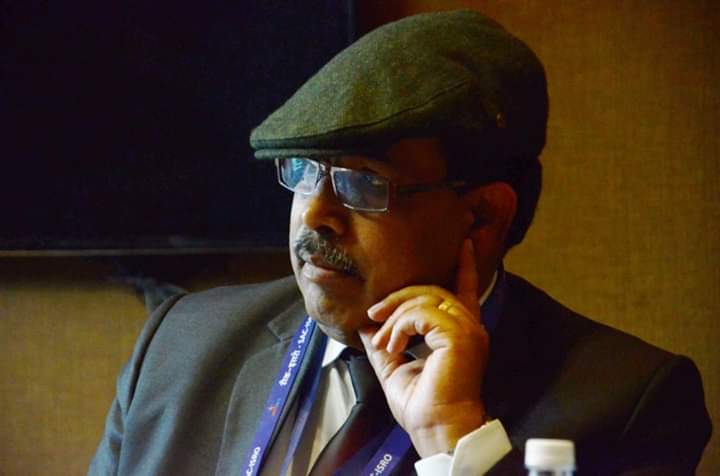
Tapan Misra is a distinguished scientist, who has earlier served as Director Space Applications Centre (SAC) and has contributed immensely to India’s Space Programme. He has founded the startup SISIR Radar to make synthetic aperture radars (SAR). These can be fitted on drones and SISIR Radar has already demonstrated the immense capability of drone borne radars to take clear pictures even at low altitude.
