
Uday Kumar Varma

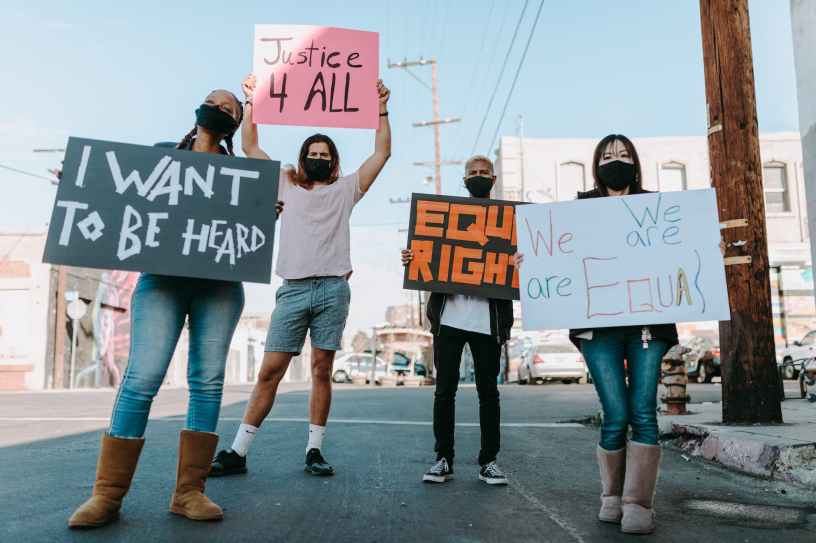
On June 29, the Supreme Court of US declared race preference (or consciousness) in university admissions unconstitutional. “The way to stop discrimination on the basis of race is to stop discriminating on the basis of race.” observed John Roberts, the Chief Justice.
The ruling set off a raging firestorm politically and socially. The outcry of disapproval was sharp and strident. The reactions varied, from a milder ’Blow to Diversity’, to bitter and truculent, terming the judgment as a message that ‘America remains unwilling to reckon
with the barbarity of their racial history.’And yet it is forcing universities to find newer ways to retain and increase diversity on their campuses. Making ‘class’, and not ‘race’ as the basis of preference finds wider support. The socio-economic disadvantage (SED) is the new buzz word in this regard.
This article, in three-parts, attempts to deal with this complex, touchy and volatile issue, which some say has implications for reservations in admissions in educational institutions back home.
Part I discusses the origin and historical context for the emergence of affirmative action and the long sustained challenge to it.
Part I
The way to stop discrimination on the basis of race is to stop discriminating on the basis of race.” –John Roberts, Chief Justice, US Supreme Court
On 29th June, 2023 the Supreme Court of US struck down affirmative action in college admissions, declaring that race cannot be a factor for admissions. The Court ruled, “however well-intentioned and implemented in good faith, the universities’ admission practices did not pass constitutional muster, and that race could no longer be considered in deciding which students to admit.”
The race preference or the race consciousness in college admissions that has been a defining feature of US universities for last 60 years, and which, as many believe, was a singular factor in bringing about campus diversity, stands demised.
The Court, however, endorsed the need for such diversity but through new ways, compelling the institutions of higher education to look for other ways to achieve student diversity. “Nothing in this opinion should be construed as prohibiting universities from considering an applicant’s discussion of how race affected his or her life, be it through discrimination, inspiration or otherwise.”, Chief Justice clarified.
Outcry of Disapproval
The judgment sent shockwaves across the country. The outcry of disapproval and disappointment was shrill and strident. They termed the glib framing of the issue of discrimination by the Court as drawing on a pernicious, false moral equivalence. ‘Blow to Diversity’, was a milder reaction. A more bitter response was calling the judgment a sad confirmation that America as a nation remains unwilling to reckon with the barbarity of their racial history.
And yet many also voiced optimism that they would find new ways to admit more Black and Hispanic students, despite evidence that eliminating the practice in the past has often led to steep decrease in their enrolment.
A Chequered Legacy
Almost 60 years ago, Affirmative Action was introduced in the United States under the administration of President Lyndon Johnson (1963–69) in order to improve opportunities for African Americans just as civil rights legislation was dismantling the legal basis for discrimination. The first federally instituted affirmative action policies came in under the landmark Civil Rights Act of 1964 and through an Executive Order in 1965.
In a historic commencement address at Howard University on June 4, 1965, President Lyndon Johnson laid out the intellectual and moral basis for affirmative action. He invoked a metaphor that remains resonant nearly 60 years later: “You do not take a person who, for years, has been hobbled by chains and liberate him, bring him up to the starting line of a race and then say, ‘You are free to compete with all the others,’ and still justly believe that you have been completely fair.”
Possibly one of the most passionate and persuasive endorsements of the affirmative action.
Johnson’s call did not go in vain. And the concurrent civil rights movement for racial justice, made many selective colleges and universities alter their admissions policies with the express intent of increasing the number of Black students. Affirmative action offered a way to take into account far-reaching differences in personal circumstances and to begin to right a historic wrong.
But the honeymoon of public support was brief. It met with a powerful backlash. As early as the 1970s, affirmative action was already facing legal challenges, with critics calling it “reverse discrimination”. The first major challenge was Regents of the University of California v. Bakke (1978), in which the US Supreme Court ruled (5–4) that quotas may not be used to reserve places for minority applicants if white applicants are denied a chance to compete for those places. This decision allowed colleges to use race as a factor of admission.
But the support and spirit was attenuating. During 80s and 90s, the apex court gave increasing weight to claims of ‘reverse discrimination’ and significantly curtailed affirmative action policies. However, the constitutionality of affirmative action was confirmed in the landmark Bollinger decisions (Grutter v. Bollinger) of 2003.
The last major challenge to affirmative action was warded off in 2016, when the Supreme Court headed by Chief Justice Anthony Kennedy upheld an admissions program at the University of Texas at Austin, holding that officials there could continue to consider race as a factor in ensuring a diverse student body (Fisher v. University of Texas).
And now, in a 6-to-3 decision, the Supreme Court has consigned them to the grave. In a way, the judgment was not entirely unexpected. Since 2016, the overwhelming conservative composition of Supreme Court has produced some extremely controversial decisions. This latest verdict is a confirmation of this trend and has set off yet another political firestorm in the US.
Legally Infirm?
No, the legal infirmities in the Supreme Court order is not deemed the principal weakness in the order, politics and insensitivity is. In fact, the criticism of the judgment is surprisingly muted on this count. On the contrary, the legal soundness of the judgment is explicitly and implicitly acknowledged by legal experts. In a strict legal sense, then, the judgment perhaps musters a reluctant acceptance.
Bad Facts Make Bad Laws
The cases that Supreme Court decided were primarily moved on behalf of Asian Americans who argued that despite their candidatures being more meritorious, they were losing out to much less deserving black and Hispanic communities. David French, a vocal supporter of Affirmative Action, explains in an article that why Harvard lost — and why race-based affirmative action in public colleges and federally funded private schools is now unlawful, is because of two key facts. First, the evidence is overwhelming that Harvard actively discriminated against Asian applicants. As Chief Justice John Roberts notes, “ a Black student in the fourth-lowest academic decile had a higher chance of admission to Harvard than an Asian student in the top decile.” Secondly, Harvard specifically rejected alternative, race-blind formulations that could have achieved comparable student diversity. As Justice Neil Gorsuch notes in his concurrence, “Harvard could nearly replicate the current racial composition of its student body without resorting to race-based practices,” if it gave socioeconomically disadvantaged students just half the advantage it gave recruited athletes and if it eliminated preferences for “the children of donors, alumni, and faculty.” A very strong indictment of Harvard’s willing weakness for legacy preferences, but absolutely true, even unconscionable.
The Challenge of Finding Other Ways
But what the verdict does, is to compel the state and the society to find better ways to bring about racial diversity in the realm of education. Only it is disruptive and disturbing to many. The onus now, is on the law makers, the government and on those who have been opposed this affirmative action. And as much on those who favour and support affirmative action, for, they must ensure that they are a fitting claimant of this racial consciousness, they and their future generations.
Broader public opinion in US favour affirmative action based on economic class rather than race-conscious policies. A recent Washington Post poll showed that 62 percent of Americans believe that students from low-income families have an unfair disadvantage in getting into a good college. And yet affirmative action alone on its own, whether based on race or economic class, is far too limited a tool to realize the dream of the great civil rights movement of the 1960s for full racial equality. To recall Dr. Martin Luther King Jr.’s admonition, “to produce real equality, the movement must address itself to the question of restructuring the whole of American society.”
Given the fact that the past evidence in US, from States that previously outlawed affirmative action did not improve racial diversity casts a shadow on future.
The new initiatives may be a tall order.
But haven’t pathbreaking reforms always emerged out of impossibly hopeless situations? This one is not so hopeless.
Part II
As Universities are forced to look for other ways to increasediversity in their student body as a consequence of Supreme Court judgment, the Socio-Economic Disadvantage(SED) is emerging as a cardinal consideration. It has obvious merit, not only on account of research data but also because it stands to logic. Any group of applicants responding to SED criteria will preponderantly consist of black applicants. Surprisingly, the most influential black leader Martin Luther King Jr. had advocated this criterion 50 years ago.
Read about the churning to find new ways to ensure diversity and equity in college admissions.
Inadvertently though, the affirmative action had produced a culture of racial gamification by encouraging black and Hispanic students and their parents to think about the ways race could boost or complicate their chances of admission. It thus became a game aimed at cornering the benefits of race preference. Such a situation was intrinsically counterproductive, because it sought to make a virtue of being a black or Hispanic.
But a remarkable feature of US systems and society is their capacity to acknowledge a challenge and find ways to address it. The Supreme Court ruling has done exactly that. It has spurred politicians, civil right leaders, academicians and opinion makers to vigorously look for other ways to ensure diversity on the college campuses. “We need a new path forward, a path consistent with the law that protects diversity and expands opportunity’, is not an uncommon response to the judgment.
Socio-Economic Disadvantage(S.E.D.)
The Supreme Court while dealing with Harvard and North Carolina cases relied, inter alia, on expert witnesses. One such witness was Richard D. Kahlenberg, a known authority on affirmative action and writer of several books including “The Remedy: Class, Race and Affirmative Action” and credited with a great deal of research on affirmative action.
His considered opinion is that if socio-economic disadvantage(SED) replaces racial preference, the diversity among the students will improve significantly.
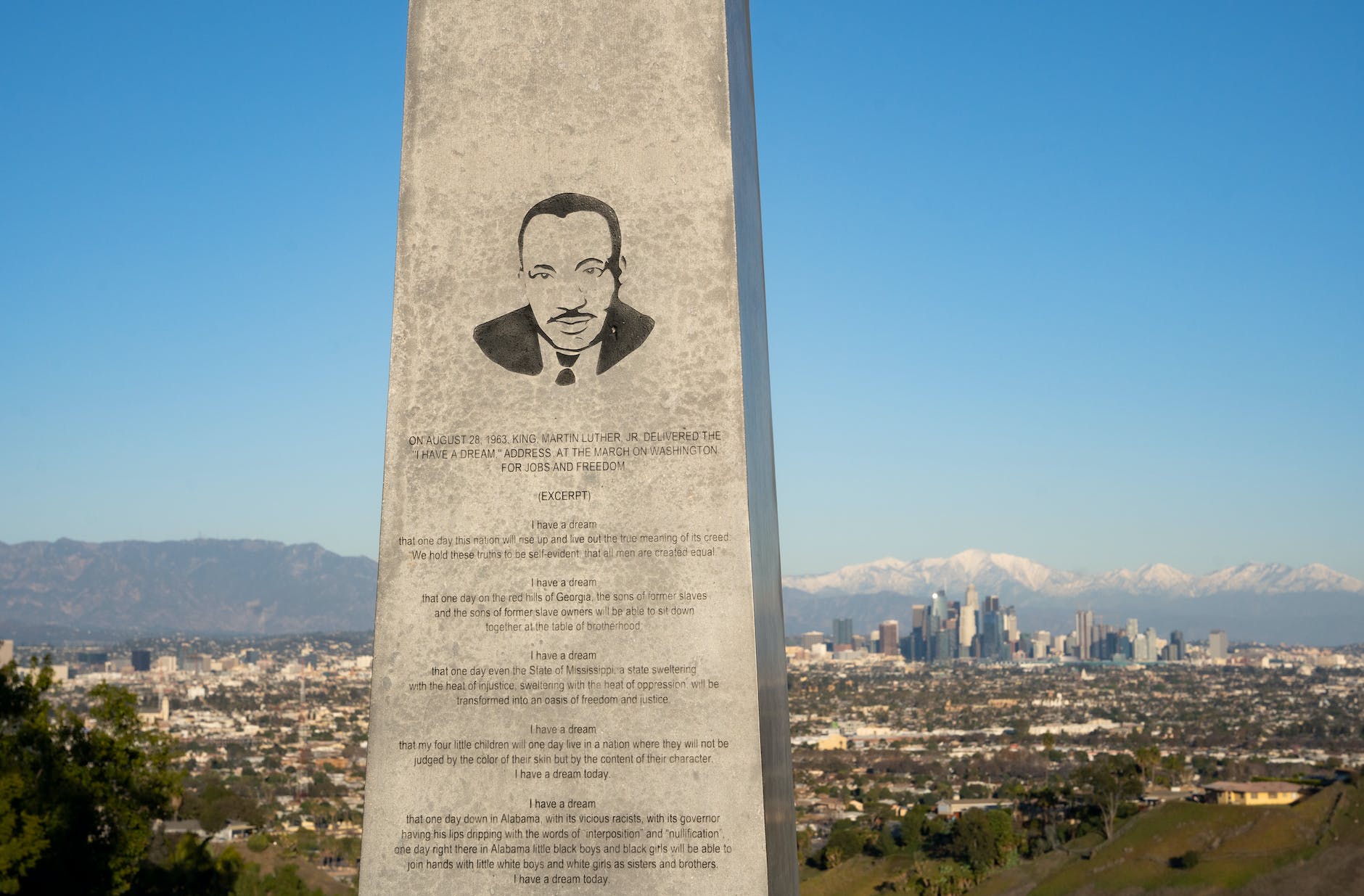
His conclusions are based largely on research data but he also relies on logic and a historical perspective. Referring to the polarising schism between supporters and opponents of affirmative action, he advocates a middle path. “Fortunately, an attractive third path is available: giving a leg up to economically disadvantaged students of all races, a disproportionate share of
whom are people of colour. Dr Martin Luther King Jr. wrestled with the question of what steps should be taken to remedy America’s history in his 1964 book, “Why We Can’t Wait”. His elegant solution: rather than arguing for or against a Bill of Rights for the Negro, he advocated A Bill of Rights for the Disadvantaged of all races.”
The logic is impeccable and the invocation of King Jr. offers an additional ring of sincerity of his approach.
Larger Acceptability?
Incidentally, this approach also enjoys a broad appeal with the American public. A 2016 Gallup poll found that while 63% of Americans oppose colleges using race as a factor in admissions, 61% favour consideration of economic circumstances. The notion that the poor of all races have a special claim has been a universally accepted tenet across all political, religious and ethical
beliefs and dispensations. And it. Social science research finds that today, being economically disadvantaged in America poses seven times as large an obstacle to high student achievement as does race.
So, SED is increasingly considered to be a far more rational criterion foradmissions than race.
Adversity Score
Terms like ‘Adversity Score’, though broader in concept than mere SED, and adopted by some universities, has at its core SED as its most defining aspect.
To build a diverse class of students, the medical school at U.C. Davis in California ranks applicants by the disadvantages they have faced in their lives.
Dr.Mark Henderson, the Head of admissions has developed an unorthodox tool to evaluate applicants: the socioeconomic disadvantage scale, or S.E.D. The scale rates every applicant from zero to 99, taking into account their life circumstances, such as family income and parental education. Admissions decisions are based on that score, combined with the usual portfolio of grades, test scores, recommendations, essays and interviews.
The disadvantage scale has helped turn U.C. Davis into one of the most diverse medical schools in the country — notable in a state that voted in 1996 to ban affirmative action.
Can it work nationally?
Race V. Poverty
In a 1987 address at Harvard University’s chapel commemorating King’s life, King’s close advisor Bayard Rustin declared “Any preferential approach postulated along racial, ethnic, religious, or sexual lines will only disrupt a multicultural society and lead to a backlash,” He was pointing out the pit falls arising out of policies of racial preferences.
King himself, more than 50 years ago, advocated an inclusive path for the country. He favoured policies that uplifted the disadvantages people across races. Given today’s increasingly divisive discourses, Supreme Court judgment offers a pause to reflect and act in the larger interest of the society.
Kahlenberg writes, “Universities have taken a very different path from the one King and Rustin advocated, which demagogues both on the right and the left, have brilliantly exploited. Racial preference programmes surely help explain why 60% of white working-class Americans say that “discrimination against whites has become as big a problem as discrimination against blacks.”
There is one advice that has forcefully been tendered by one of the most successful tutors for black and Hispanic aspirants for Ivy League universities. What advice would I give if I were tutoring again, sitting across from talented brown or Black kids worried that the Supreme Court has just made it easier to keep them out of the school of their dreams?
His message carries a far stronger conviction and resolution; and a vision far beyond present times and circumstances.
He says, “Remember that racial gamification is just that: a game. Ignore anyone who would have you believe that attending Ivy League universities with their endowments as large as a reasonably sized country’s nominal G.D.P.- is the only path to happiness or success or racial equality. Civil rights leaders did not endure the dogs and the cold baptism of the fire hoses in the hopes that one day their children’s children could become Ivy-minted venture capitalists
and management consultants. Remember that Martin Luther King Jr. did not dream of a multiracial oligarchy and that the “vaults of opportunity” of which he spoke are not hidden only behind a golden door at Yale University. There are other paths in life that do not require gaming anything. Remember that hope is wherever you find yourself.”
In building the case for his Bill of Rights for the Disadvantaged, King wrote: “It is obvious that if a man is entered at the starting line in a race three hundred years after another man, the first would have to perform some impossible feat in order to catch up to his fellow runner.” But it is precisely because of that history, King argued, that a Bill of Rights for the Disadvantaged would disproportionately benefit black people who “form the vast majority of America’s disadvantaged”. At the same time, it was appropriate for poor whites to benefit, King said, because they suffer deprivation, if not racial discrimination.
“It is a simple matter of justice that America, in dealing creatively with the task of raising the Negro from backwardness, should also be rescuing a large stratum of the forgotten white poor,” he wrote.
Words of great foresight reflecting extra-ordinary catholicity; and so free of any racial bias. But there were not many takers for this line of thinking in last 50 years, on both sides of the fence. The prognosis sadly, is no better.
Part III
The third part of the article deals with the future of reservations in India in the context of US judgment.
The recent judgment on affirmative action in US colleges have had reverberations in India as well. In India, reservations in jobs, admissions, and other opportunities in career and education can be generally referred to as affirmative action, although their legal basis and invincibility differ significantly. Unlike the US, reservations in India are largely immune from legal challenges, making a situation similar to the current state in the US inconceivable.
Clear Parallels
However, like affirmative action in the US, reservations in India are also a polarizing idea, with clear parallels. The justification for reservations in India is similar to the one offered by Lyndon Johnson nearly 60 years ago in the context of affirmative action in the US. The idea resonates perfectly in India’s case as well. It is seen as a crucial tool to provide historically disadvantaged
groups such as scheduled castes, tribes, and backward castes with opportunities that were unavailable to them due to a flawed and oppressive social hierarchy that persisted for centuries. The continuation of reservations has become politically expedient, morally compelling, and comforting to the nation’s conscience.
While some may argue that continuing reservations indefinitely to any group even after 75 years of independence could have undesirable consequences, any such idea is likely to face overwhelming opposition. Like affirmative action in US, reservations are viewed as a means to rectify a historic injustice, the effects of which are deeply entrenched and emotionally moving. Many believe that the perpetuation of reservations is the only just and fair course of action.
However, the recent judgment in the US should prompt us to consider the future of reservations in India. The US discourse on exploring alternative methods to ensure racial diversity, which has gained traction after the judgment, holds relevance and resonance in our context as well.
Should the sections of society currently benefiting from reservations perpetually depend on this mechanism, or should they eventually outgrow it? Although no political party dares to discuss discontinuing or diluting reservations even after 75 years, it does not serve the long-term interests of the beneficiaries. Once they have been brought to the starting line, empowered, and adequately enabled, the race must continue without any encumbrances to any participant.
Privileging the Privileged
The US context reveals that considering race indefinitely, even when socioeconomic factors can produce diversity, ignores the downsides of using race as a determining factor for advancement. In India, a policy of reservations in perpetuity without in some way, considering socioeconomic factors would only serve to privilege those who are already privileged.
The notion that caste-based reservations alone can be used as a proxy for achieving social progress requires serious exploration. Once we free our minds from preconceived notions, the universe of social progress becomes liberated from restrictive and politically expedient ideas. It is time to look beyond reservations and strive for social equity and harmony.
In US, the idea that race should be perpetually considered, even when socioeconomic preferences can achieve racial diversity, disregards the division caused by racial preferences. Martin Luther King Jr. recognized the costs of using racial preferences, particularly for the progressive coalition. He understood that wealthy white interests had long used race to divide working-class whites and blacks, preventing them from joining forces. King did not want to further that goal by embracing racial preferences. In a letter to an editor of “Why We Can’t Wait,” King wrote: “It is my opinion that many white workers whose economic condition is not too far removed from the economic condition of his black brother will find it difficult to accept a ‘Negro Bill of Rights’ which seeks to give special consideration to the Negro in the context of
unemployment, joblessness, etc., and does not take into sufficient account their plight [that of the white worker].”
King’s close advisor, Bayard Rustin, emphasized the division caused by racial preferences in a 1987 address at Harvard University’s chapel commemorating King’s life. He declared, “Any preferential approach postulated along racial, ethnic, religious, or sexual lines will only disrupt a multicultural society and lead to a backlash.”
In any human society, especially one like India, characterized by complex social layers deeply ingrained over centuries, perpetuating privilege is likely to have two clear consequences. Firstly, it will result in a backlash from those who are deserving but denied opportunities they are worthy of, due to a flawed system. This backlash may take time to manifest but will eventually arise. Secondly, a group that enjoys prolonged privilege may develop complacency and arrogance. Eventually, discrimination may even emerge within the privileged group, as those who have grown beyond their initial disadvantages adopt an adversarial position against the socioeconomically disadvantaged within their own group.
Both these consequences are inevitable and contribute to the same social tensions that reservation policies seek to diminish. Only the actors and roles may change over time. A society built on either privileges or deprivations can never truly become cohesive and syncretic, even in the long run. It is crucial for us to reflect on this, including those who are the beneficiaries of these preferences.

Uday Kumar Varma, a 1976 batch IAS officer of Madhya Pradesh cadre, was Secretary Information & Broadcasting, member of the Central Administrative Tribunal (CAT) and member of the Broadcasting Content Complaints Council, a self-regulatory body for general entertainment channels. As Secretary I&B, he spearheaded the nationwide digitisation programme.
 This is News