
Newsroom24x7 Network

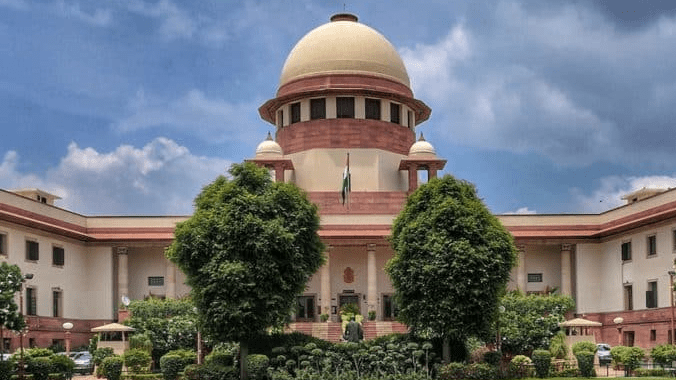
New Delhi: Supreme Court of India on Tuesday 11 July 2023 declared as illegal the orders of 17 November 2021 and 17 November 2022 granting extensions to the tenure of Sanjay Kumar Mishra, as Director of Enforcement, for a period of one year each.
Partly allowing a batch of writ petitions, the Supreme Court has permitted Sanjay Kumar Mishra to continue to hold office till 31 July, 2023. The apex Court however has dismissed the writ petition challenging the Central Vigilance Commission (Amendment) Act, 2021 and the Delhi Special Police Establishment (Amendment) Act, 2021 as well as the Fundamental (Amendment) Rules, 2021.
The Supreme Court judgement by a three-judge bench headed by Justice B.R. Gavai and comprising Justice Vikram Nath and Justice Sanjay Karol has come in response to a batch of writ petitions to seek a writ, order or directions in the nature of certiorari for quashing of order dated 17 November 2021 for further extension to the ED, Sanjay Kumar Mishra. In Writ Petition (Civil) No.1106 of 2022, a further extension granted to Mishra, through order of 17 November 2022 was also challenged. All these petitions also challenged the validity of Central Vigilance Commission (Amendment) Act, 2021, the Delhi Special Police Establishment (Amendment) Act, 2021 and the Fundamental (Amendment) Rules, 2021.
Sanjay Kumar Mishra was working as Principal Special Director in the Directorate of Enforcement and was appointed as Director of Enforcement for a period of two years from the date of his assumption of charge of the post or until further orders, whichever was earlier, through an order dated 19 November 2018.
The main argument against the successive tenure extensions granted to Mishra was based on the famous Vineet Narain case in which the Supreme Court had ordered a fixed tenure for the post of CBI Director. The argument against the tenure extensions to Mishra was that the government does not have arbitrary powers to do this.
Through an order, dated 13 November 2020, the President of India approved the modification of the order dated 19 November 2018 by amending the period of appointment from two years to three years.
 This is News