

Uday Kumar Varma
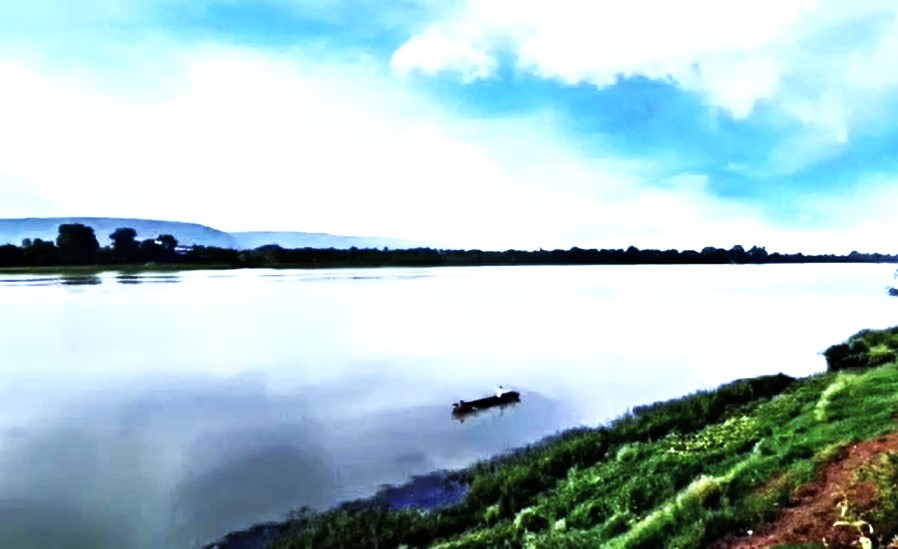
Few spots capture the majesty and magnificence of River Narmada as
evocatively as the backyard of the Circuit House at Hoshangabad, now
Narmadapuram. As one stands on the sun-dappled floor of the raised
parapet overlooking the river, shaded by an ancient peepul tree
reportedly over 300 years old, the sight of Narmada flowing languidly
and leisurely close by is breath-taking. But it is the grandeur of
serenity that overwhelms you.My recent visit to this beautiful place after a gap of decades,
offered a bliss and peace rarely experienced. It was as if a slice of
nature’s resplendence had frozen in time.
One of the most mesmerizing and serene spots to enjoy the majesty and beauty of the Narmada is from the parapet of the courtyard of the Circuit House at Hoshangabad (now Narmadapuram).
There are places where time seems to have stood still since eternity. So little has changed, and what has, has changed ever so imperceptibly that the sights, sounds, motions, and movements appear to have frozen in time. The banks of ancient rivers are often reminiscent of this immutability.
One such place is the Narmada River as seen from the Circuit House of Narmadapuram.
I visited this place in 1977 on New Year’s Eve. As one of the young probationers of the Indian Administrative Service, we were touring the district. The then District Magistrate of Hoshangabad, an ebullient and vocal officer risen from the ranks, had invited us for a party organized in the back lawns of the Circuit House. The party was full of energy and the mood was effervescent. Drinks flew with abandon and the conversations was noisy and unrestrained. The cool December night became a memory lasting for a long time.
Sometime in the middle of the next half century, standing at this exact spot and gazing at the river, my young son of eight, Vinayak wrote in the margin of his school textbook: “The atmosphere is calm and serene, all around me are patches of green.”
Over forty-five years later, I visited this place again and as I stood in the same lawn, it appeared to me the jocund night of 31st December 1977 had occurred just yesterday. Nothing seemed to have changed – the same grass, the same bed of flowers, the same trees ringing the lawn, only taller and more luxuriant, the same stairs leading to the parapet that overlooked the river. The same immortal pipal on the parapet, the same cat curled in the corner. The same languid and leisurely flowing Narmada – sprawling, graceful, resplendent, and greenish blue, the same banks sparsely dotted by men, women, and children bathing.
The experience was ethereal and surreal. The permanence of images and the eternity of time was never so evident or so deeply felt.
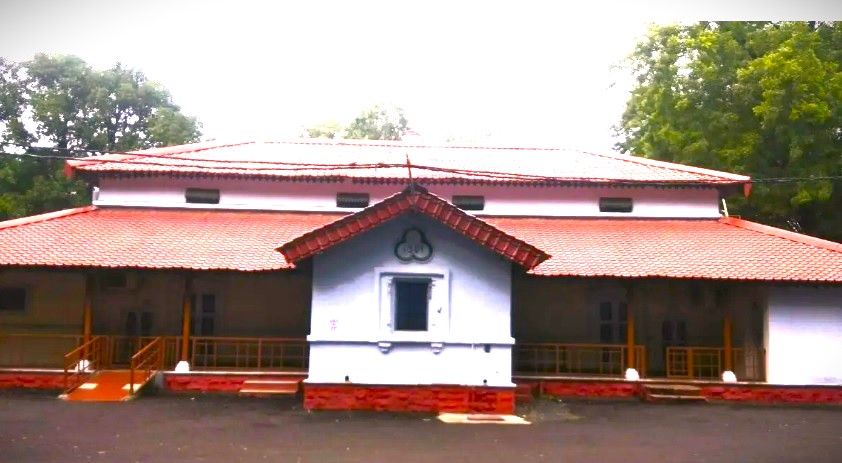
There are two living witnesses to the immutability of time that defines this place. They have witnessed with silence and possibly amusement, resentment, or equanimity by turn, what has transpired at this place for over a hundred years. One is the ancient, hoary, and sprawling pipal tree standing on the parapet regally overlooking the Circuit House. Almost four meters in girth and with a towering height of almost eighty, this tree, reportedly more than three hundred years old, offers a sight of rarely matched magnificence and grandeur. It is doubtlessly a mute but involved witness to the events and history that have devolved here over time.
The second and equally imposing witness is the Circuit House itself. A colonial building built in 1901, it stands out as a graceful and captivating mansion, ringed by mango, neem, and teak. Its grandeur is accentuated by its simplicity and unembellished architecture that lends to it a unique majesty. Its rooms, lawns, and surroundings have heard and enjoyed the machinations of politicians, the arrogance of bureaucrats and the excited enjoyment of visitors who have stayed here for the peace and serenity that the place offers.
If only the pipal tree and the Circuit House could speak or write, the chronicles that will emerge will have every ingredient to make them bestsellers of all times.
What’s more than just an eyesore
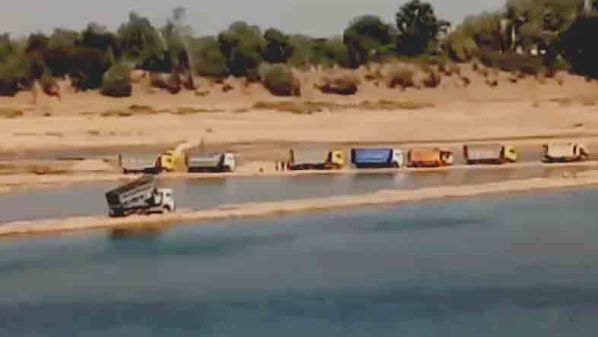
However, as one looks beyond this sylvan slice of time, there is sight that completely deranges you. It is the sight of hundreds of tractors and attached equipment digging the bed of the river, scourging it for sand. It is painful to see the constant stabs inflicting deep, grievous wounds in the womb of this Goddess.
The logic of governance and the compulsion of economics that have pushed the government to allow this plundering defies explanation. The silence of environmentalists on the issue is deafening. But perhaps more mystifying is the acquiescence of all those who claim the Narmada to be a living Goddess and swear by their devotion to this deity whose very plunder and defacement they so clearly seem to encourage and even enjoy. If there is a law of nature, the retribution for these perpetrators must come summarily and swiftly.
As we stroll on the cobbled footpath along the banks of the Goddess, another ugliness, both unbearable and ungainly, is the plastic bottles and polythene bags that litter and dot the surroundings. It is no mere eyesore; it is a wound inflicted on the tenderness of this beautiful place. If only the men and women fortunate to be the denizens of this historic ancient human habitation could hear the silent cries and remonstrations of this great river. Perhaps in her benignity, the Goddess will not seek retribution, but certainly she will one day compel us somehow to rectify the aberrations that we are so willingly inflicting, imposing, and encouraging, unless we choose to do so ourselves.
That will be a sad day indeed.
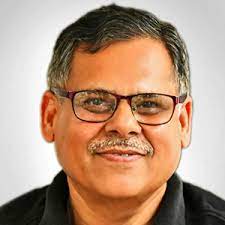
Uday Kumar Varma, a 1976 batch IAS officer of Madhya Pradesh cadre, was Secretary Information & Broadcasting, member of the Central Administrative Tribunal (CAT) and member of the Broadcasting Content Complaints Council, a self-regulatory body for general entertainment channels. As Secretary I&B, he spearheaded the nationwide digitisation programme.
 This is News