
Newsroom24x7 Network

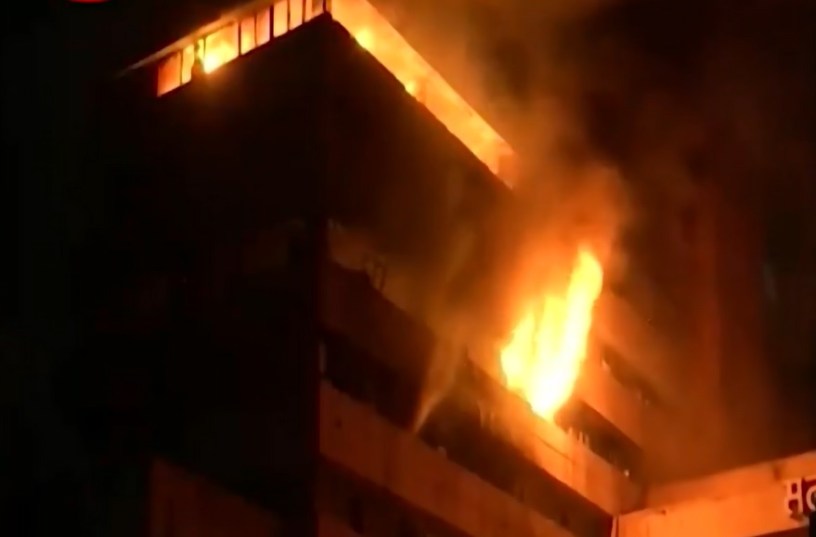
Bhopal: The devastating fire that broke out at the Satpuda Building located on the picturesque Arera Hill – just a stone’s throw from Vallabh Bhawan, the State Secretariat of Madhya Pradesh, and the State Assembly, has raised many questions and put the Government in the dock.
Providentially, there has been no casualty but the blaze, which raged for hours, has destroyed important Government files. Sections of the media and also people are especially drawing attention and talking of files and documents relating to payments made to hospitals under the Ayushman Bharat scheme during the COVID-19 pandemic.
The Congress has described the fire as a conspiracy to “destroy evidence of corruption”.
Eyewitnesses described scenes of panic and chaos as thick plumes of smoke billowed – first from the 3rd floor and then the fire had engulfed even the 6th floor. The fire, reportedly caused by an electrical short circuit quickly spread to other levels. What is significant is that no one was trapped in the fire and everybody had the time to run for safety. But what has exposed the huge chink is the failure on the part of local authorities, including the Bhopal Municipal Corporation Fire Department and Police, to rush fire tenders to bring the fire under control without wasting time.
While the fire, said to have been ignited by a short circuit, was raging, State Chief Minister Shivraj Singh Chouhan was busy communicating with the Prime Minister, Union Home Minister and Defence Minister seeking help from the Army and Indian Air Force. Finally, it was the Army that came to the rescue and doused the fire and brought the situation under control but this was not before the fire had engulfed many floors.
The incident has sparked outrage and raised serious questions about fire safety regulations and the state of preparedness in multi-story buildings across the State capital and also other parts of Madhya Pradesh. The Government has launched an investigation to determine the exact cause of the fire and whether any negligence or violations contributed to the tragic outcome. The government authorities will face scrutiny in the coming days as investigation continues to study the safety measures in the building at the time of the incident.
The Satpuda Building fire will be remembered as a dark chapter in Bhopal’s history, one that calls for introspection, accountability, and the urgent need for stronger fire safety regulations across the state.
Failures and Shortcomings in Controlling the Satpuda Building Fire in Bhopal
- Delayed Response: One of the key failures in the Satpuda building fire incident was the delayed response from the authorities, especially District administration and Municipal Corporation. The fire reportedly started on the third floor due to a short circuit but rapidly spread to the sixth floor before it could be brought under control. The time gap between the ignition and the arrival of the firefighting teams allowed the fire to intensify and escalate to higher levels.
- Inadequate Fire Safety Measures: The incident raises serious concerns about the fire safety measures in place within the Satpuda Building. Reports indicate that the building lacked proper fire safety equipment, including fire extinguishers and sprinkler systems, which could have contained the fire at an early stage. The absence of effective fire safety protocols and systems contributed to the rapid spread of the fire.
- Insufficient Emergency Preparedness: The response to the fire exposed shortcomings in emergency preparedness.
- Lack of Training and Equipment: Firefighters on the scene faced numerous challenges due to inadequate training and insufficient equipment. The intensity of the fire and the height of the building demanded specialized training and equipment for effective firefighting and rescue operations.
- Communication and Coordination Issues: Reports suggest that there were communication and coordination issues among the various response teams involved. Efficient communication is critical in emergency situations to ensure a coordinated response. Delays or breakdowns in communication can lead to confusion, inefficiencies, and delays in deploying resources effectively.
- Inadequate Building Inspections: The incident highlights the failure of regular building inspections and adherence to fire safety regulations. The Satpuda Building should have undergone periodic inspections to ensure compliance with fire safety standards. The lack of oversight and enforcement allowed the building to operate without adequate fire safety measures, putting the occupants at risk.
- Negligence and Violations: The investigation into the incident should focus on determining whether negligence or violations played a role in the fire. The incident calls for tight scrutiny for potential violations of fire safety regulations, such as inadequate maintenance, electrical system failures, or improper storage of combustible materials.
Addressing these failures and shortcomings is crucial to prevent similar incidents in the future. The local authorities must conduct a comprehensive review of fire safety regulations, enforcement mechanisms, and emergency response protocols to ensure the safety of residents and employees in commercial buildings across the city.
