
ENVIRONMENT DAY SPECIAL: 5June 2023
Newsroom24x7 presents – Letter from an expert
Dear Citizen of India,
Greetings,
Today we are observing the “World Environment Day”, I greet you on this day and invite your kind attention to certain facts and issues, pertaining to our “environment resilience”.
On this special occasion, let me focus special reference to “Status of forests and wildlife in India”, long term trends of factors climate change, impact of climate change on forests and wildlife and “Forest Types”.
The presentation (attached below in pdf format) that can be downloaded is having 2 parts – Part-I having 69 slides and Part-II having 94 slides. The content and coverage of the presentations are as follows:
- Anthropo-centrism and contempo-centrism.
- Long-term trends of “Climatic Factors” – Hole in the “Ozone Layer” above Antarctica, due to CFCs emission & threat, Ozone Depletion Earth’s Shrinking Biosphere
1900-2000 AD World – Annual Precipitation Trends Anthropogenic Radio-active System Comparison of Temperature Change Global Temperature Range Indicators of Human Influence, Rising Sea Level, Receding Gangotri Glacier, Northern India Glacial Retreat between 1960 & 2000, Spatial patters of the changes in summer monsoon rainfall. - Constitutional provisions related to “forest” & “wildlife” –
• Indian Forest Act, 1927 (RF and PF cannot be used for carbon trading purposes).
• Wildlife (Protection) Act, 1972 (prohibitory in nature, plantations / forest crop cannot be harvested in protected areas of the country).
• Forest (Conservation) Act, 1980 (regulate allocation of forest areas to private entities).
• Forest Types of India Silviculture – The Science Of Forest Management. The type of forests are functions of edaphic factor, rainfall pattern, water resources, temperature, latitude and longitude, exposure, aspect, altitude, biotic factors etc.
• Silviculture is the “science of forest management” – Forest are managed on the basis of “Silviculture Management Systems”.
• Forest Working Plans are prepared after thorogh study of area for 3 years. These Working Plans are sanctioned by the State Government and GOI under the Section-2(iv), Forest Conservation Act, 1980.
• Average Growing Stock of the World – 110 cmt/ha., while Indis’s average is 65 cmt/ha. - RET Species – Amphibians are having narrow range of tolerance, the population of species like Hyla hyla, Rana tigrina, Bufo melanofrictis has declined substantially. The useful insects like Apis mellifera, Apis dorsata, Listeria dudgeni, Papilio elephenor, Baltia butleri sikkima, Lethe guluihal guluihal are disappearing at fast rate. The xerophytic species like Calotropis procera, Argemone maxicana, Prosopis juliflora are appearing in area which are not their natural habitats. It is evident that mesophytes are giving way to xerophytes; the nature is sending warning signals in shape of ecological indicators but we are not ready to open our eyes and perceive the disaster looming on us.
- Effect On Sea Currents On Aquatic Life And Mangrove Forests –
Projected Impact Of Climate Change On Forested Grids In India A2 Scenario
Climate Change and Forests
Vegetational changes projected by 2021-2050 and 2071-2100 Spatial patterns of the changes in annual mean surface air temperature Ibex Roasted Alive in the Himalayas in Intense Forest Fire – 2018 : Uttrakhand fire lines were not maintained Impact of Climate - Change on Moist Forest Biomes Forest type distribution and extent simulated by IBIS for the baseline case and A1B (2035 and 2085) scenarios. (VT – refers to Vegetation Types. The numbers refer to the following vegetation types
1: Tropical evergreen forest / woodland,
2: Tropical deciduous forest / woodland, - Temperate evergreen broadleaf forest / woodland,
4: Temperate evergreen conifer forest / woodland,
5: Temperate deciduous forest / woodland,
6: Boreal evergreen forest / woodland, 7: boreal deciduous forest / woodland, 8: mixed forest / woodland,
9: Savanna,
10: Grassland/ steppe,
11: Dense shrubland,
12: Open shrubland,
13: Tundra,
14: Desert, - Polar desert / rock / ice) Forest Cover and Biosphere Reserves of India
- Notified under the “Man & Biosphere” program of UNO).
- Average Annual Rainfall of India – 1971 to 2005 Mean Precipitation of India, Thunderstorm Susceptible Regions Of India, Monthly Rainfall Data of India – Shrinking of Monsoon is clearly Visible, Serious Threat to Sal Regeneration Landuse & Land Cover Map of India Elevation Zone Map of India
- Most threatened floral species – I Effect of fragmentation of forest & wildlife habitat corridor Typical forest & village mosaic of a protected area Gall formation and un-sustainable resin exploitation in associate species,
- Issues Of Wildlife And Wildlife (Protection) Act, 1972 Applicability Of WLPA
Present & Potential “Protected Areas” of India
• Jurisdiction of Wildlife (Protection) Act, 1972 The Wildlife (Protection) Act, 1972 is having jurisdiction over all National Parks, Wildlife Sanctuaries, Community Reserves and Conservation Reserves. The Buffer Zones / Ecosensitive Zones (ESZ) are notified under the Environment (Protection) Act, 1986.
• All species notified under WLPA. Including species specified under Invertebrate Classification of “Storer & Usinger” and Chordate Classification of “Colbert”.
• The species notified in the Appendix-I, Convention on International Trade of Endangered Species (CITES) are also protected, but WLPA is silent on this issue.
• The population of many species are either stable or going down – genetic drift due to small population, expression of “recessive alleles” – White Tiger, Black Panther etc. - The Consequences of Isolation of Populations Contraction of Asian Elephant Range Over-time Statutory provision for Environment, Forest and Wildlife Clearances
- Biological Diversity Act, 2002
- Analysis of Crop Assessment Forest Crop near absence of regeneration Forest Crop exhibiting signs of “Senescence” Forest Crop exhibiting signs of “Senescence” and dry rot Analysis of Crop Assessment – Phoenix Infestation
- Degradation & opening of Sal forests Dried Sal Forests Assessing Stem Condition in Timber Depot Impact of Sal Borer & consequent heavy mortality in crop – 1 Impact of Sal Borer & consequent heavy mortality in crop Phoenix sylvestris and P. acualis infestation in Sal forests.
- Invasive species in Sal forests, MP Sal Regeneration Technique to be adopted on Technically reclaimed sites and degarded sites
- Typical Teak forests in the country Effect of repetitive coppicing in Teak crop Serious Phoenix sylvestris infestation in Teak plantations in Mixed forests Serious attack of Teak Powdery Mildew on Teak Crop Serious attack of “Teak Leaf Skeltonizer” and “Teak Leaf Defoliator” in Teak crop – Impact of prolonged temperature. Serious attack of Teak Leaf Skeltonizer and Teak Leaf Defoliator in Teak crop.
- Teak logs exhibiting signs of senescence and fire damage. Gall formation and un-sustainable resin exploitation in associate species
- The National Working Plan Code (NWPC) has been notified for management of forest areas. The basic tenet of NWPC is to manage forest resources on the basis of sustainable ‘economic rotation’. If VER / REDD / REDD+ Credit trading is considered (may be in forthcoming Mexico Conference) for forest areas, the entire process of forest working plans preparation have to be amended and revised on the lines of ‘carbon rotation’ in the ecosystem.
- Contour Bunding and soil moisture conservation.
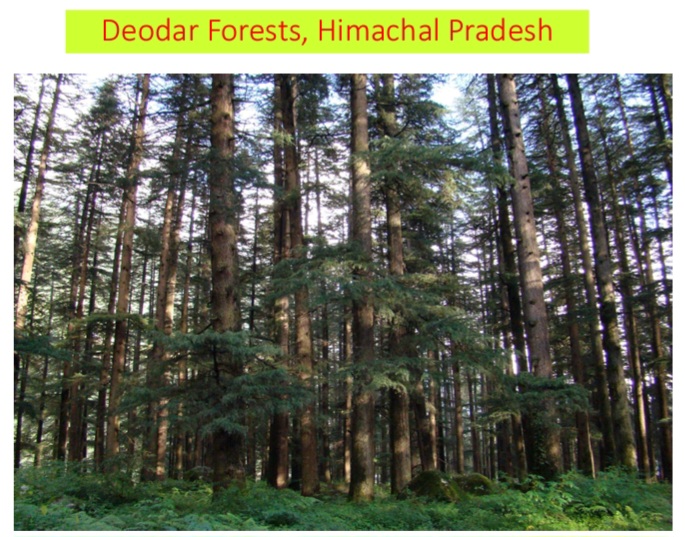
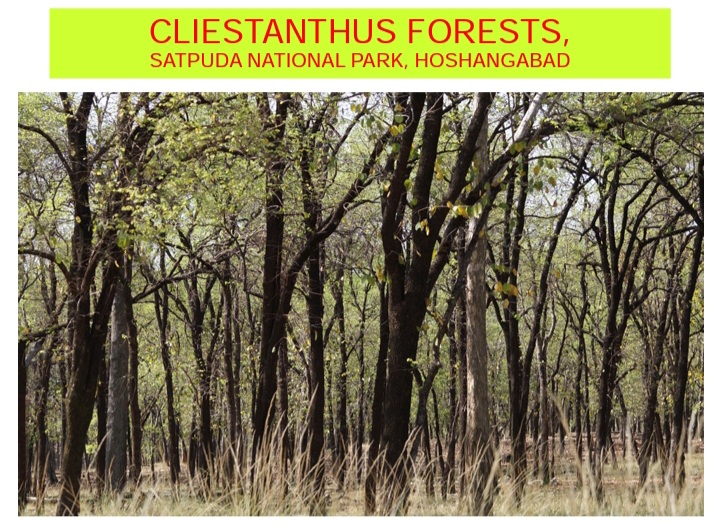
- Forest Types of India “Definition of “Forest Type”. Major Groups of Forest Types of India
Just think over the issues, I have mentioned above. What are the factors responsible for degradation of forests and wildlife in India? And could you suggest some practical solutions to these issues, in India?
May like to deliberate on issues, mentioned by me.
Best Wishes,
Ravindra Saxena
Former PCCF, MP
Mobiles : 91-9827057603; 91-9424407858
Emails : ravindra.nath.saxena@gmail.com;
ravindrasaxena2001@gmail.com
