
Newsroom24x7 Network
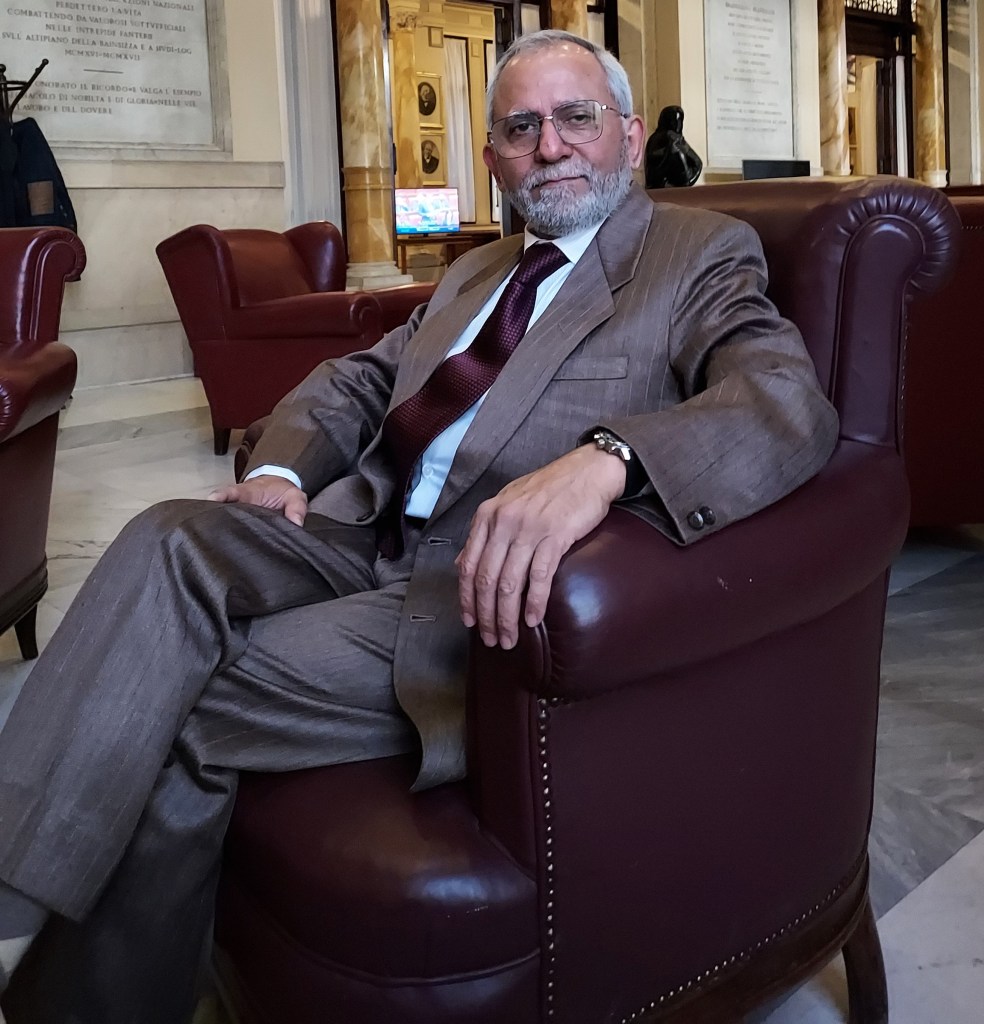
Bhopal: Noted journalist and former Bureau Chief of The Hindu (1991-2009), Lalit Shastri has shared the view that the Bureaucracy that was supposed to be the “steel frame” protected by the Constitution against all kinds of pressures, especially from the political bosses, and meant to deliver and work for the larger good of the people, is unfortunately crumbling and large part of the bureaucratic mahinery is deteriorating and is on the decline.
Shastri was addressing a brainstorming session organised by the Madhya Pradesh-Chhattisgarh chapter of Indian Institute of Public Administration at the State Academy of Administration in Bhopal on Saturday 27 May.
Shastri said that this topic is very important as well as thought-provoking. He has been a journalist for 40 years and has been the Bureau Chief of Madhya Pradesh for The Hindu newspaper. He has seen the administration and politicians closely and has also written about it. He said that he would like to present his views on the basis of some incidents.
Once he was sitting with the State Tourism Minister and the Tourism Secretary was also there. The minister, who was holding that portfolio for a very short time, asked the Secretary to make a proposal for a foreign trip telling him that he too should come along. After about a week, the secretary placed some files before the minister and said that the file regarding the proposed foreign tour is also there. The minister signed not only that file but all the files without even seeing them or bothering to know what was in them.
Similarly, Shastri said once he got an opportunity to go from Bhopal to Satna with the Chief Minister. Two Cabinet Ministers were also there on the same flight. Both of them were carrying with them bags full of files. Once the aircraft took off, the Chief Minister kept throwing the files on the floor after seeing them. One of these files was about an MLA seeking the construction of a 1 km road. Keeping it aside, the CM asked the Minister to tell the MLA to meet him. The point highlighted by Shastri was that the work was being treated as a personal favor. In this way the legislators could be kept on the CM’s side. The same was the fate of many other files. In the Secretariat/ Mantralaya, Shastri said files kept piling up from floor to the roof and only those files were seeing the light of day, if the Ministers or the CM were interested in them. He wondered, what the bureaucrats were doing in this scenario.
On the other hand, Shastri said, the officials also used to keep their own interests paramount as it is happening even today. Of course, there are exceptions and some officers are always committed to their role and responsibilities and never work for personal gains. But their number and percentage is progressively dwindling.
Shastri said, most of the bureaucrats are paying more attention towards extracting benefits and more and more perks of office for themselves. But it is a matter of concern that many are also neck deep in corruption. One thing noticed was that some officers, who were keeping 3 to 4 contingency employees as domestic help, even have the odacity to pocket a large part of their salary and only a fraction of it goes to these poor employees.
Citing another example, Shastri said the contractor was ready to complete a road construction work in 12 months and had given his offer with the same calculation. The concerned officer told him to stretch the deadline period to eighteen months and in this way, he would get a financial reward for early completion of project and this amount was supposed to be passed on to the Bureaucrat even before the work was awarded.
Shastri threw light on another case, stating how six persons remained in jail and were later released due to lack of evidence. This thing was also seen in the hawala case. No one got punished. At times, the accused are also released due to lack of permission for prosecution by the state. What happened in Delhi is the culmination of this. As soon as the decision of the Supreme Court came, the officers were changed, their office was entered at midnight. The intent is clear – to destroy the evidence.
In short, nothing has changed. In fact, things are deteriorating, Shastri added.
Expressing his views, retired DG Police level officer Narendra Prasad said that continuity is not possible because of lack of political stability. When a new party comes to power, its job is to stop all the works of the previous government and start its own work. The disruption it causes discourages officers who want to work. Those officers come in their place who can work according to the convenience of the new system.
Another DGP level retired Police officer Arun Gurtu, said that in fact we should think about the officers at the lower level. They have to be in this type of situation two or four times. If the instructions keep changing, they cannot do their work properly. Senior officers, on the other hand, are tied to a time limit. If the Chief Secretary or Inspector General of Police continues to be troubled by the fear of transfer, then he will hesitate to use his full potential. He said that the erosion of values is not only in the bureaucracy or among the politicians, but the story is the same when it comes to the family, society, and business. He was of the opinion that ideological change is necessary. Due to this, continuity can be maintained even after the change of power. He went on to point out that he was taught not to say no to the minister but do what is right. Politicians get annoyed by this but the conscience of the officer remains clear. He emphasized the need for improving education to establish such values.
Retired Bureaucrat CS Chadha (IAS,1966: MP) told that he remembers that in the Academy of Administration, Mussoorie, there is a stone inscription of Sardar Patel’s speech, which is a guide for administrative services. Sardar Patel had said that only All India Services can keep India together. The day it will not be able to do its work properly, India will not be able to remain united. He said that there is a need to muster the courage to say what’s wrong is wrong. He cited the example of Iqbal Ahmed, who clearly told the minister that he would work according to the rules. If the rule has to be changed, it is the right of the government to do that, but as long as the rule is there, it has to be followed. He said that many suggestions are rejected without giving any reason. Giving such power to ministers disrupts continuity.
Former Chhattisgarh Chief Secretary AK Vijayavargiya (IAS,1969:Chh) said that today the situation is like an inverted pyramid. The first base consisted of honest and conscientious officers and only a few of the second type. Now conscientious and honest officers can be counted on finger tips and the second type is in the majority. The same is also true for politicians. After getting Independence, there were more patriotic leaders and those who worked for their own interest were few. Now politicians come only to earn money and help their own people.
Prof HM Mishra said today the officer wants to become a leader and the leader wants to become an administrator. He wants to run the administration on his own terms and the officers cooperate in that. The Constitution has given so much protection to the officers that they cannot be prevented from doing the right thing. (Mr. Gurtu supported the point that the Constitution provides such protection to the officers, due to which the officer can remain fearless in doing his work).
Former Madhya Pradesh Chief Secretary SC Behar (IAS,1961: MP), said that he would talk about civil administration. Checks and balances have been talked about in many Constitutions across the world and the same situation prevails in India. In today’s era where internet etc has developed, it has become difficult to hide something. Work should be done keeping this in mind. He said that he has studied a lot about this and he will send articles related to it by e-mail. The Chair welcomed this and said that these could be circulated for wider dissemination. It was further emphasised that at the time of training the officers should be told about their rights and also their responsibilities. Only by following this principle, they will be able to remain devoted to the values throughout their life.
In the end, former Chief Secretary Manipur and President Board of Revenue Madhya Pradesh, K K Sethi (IAS,1963: MP), who heads the MP-Chhattisgarh Chapter of IIPA and was presiding the session, said that there has been no difference in the attitude of the administration as far as the masses are concerned. During the period of slavery, the aim was to ensure the security of the administration and to follow the law and any trick could be used for this. Public interest was never the basis of decision making. Even today the idea of responsibility towards the public is not predominant. The goals have changed slightly in that regard. The feeling of attachment of politicians and officials towards themselves (whether it is about rights or earning) has increased and the public is where it was, as it was. Then the education system had its flaws, now the problem lies more with the teachers. Individual comfort was the goal then as it is now. The only change is that everyone wants to acquire more materialistic goods. From the point of view of the common man nothing has changed, rather things are deteriorating.
At the outset, Sethi said that he has been subscribing The Hindu newspaper. It publishes two regular columns – one is “Fifty years ago” and the other is “100 years ago”. Many times he has observed that the problems we are confronting today were also there hundred years ago. The same problems were there even fifty years ago. The administration was neither with the public then, nor is it today. This thought was predominant while selecting the topic for the seminar, he added.
